


 english (AE)
 bosanski
 български
 белорусский
 中文
中文 český
český deutsch
 eesti
eesti english
 suomalainen
 français
 ελληνικά
 hrvatski
 magyar
 hindi
hindi latvijas
 norsk
norsk polski
 românesc
 srpski
 русский
 svenska
 slovenski
 slovaški
 українська
 lietuvių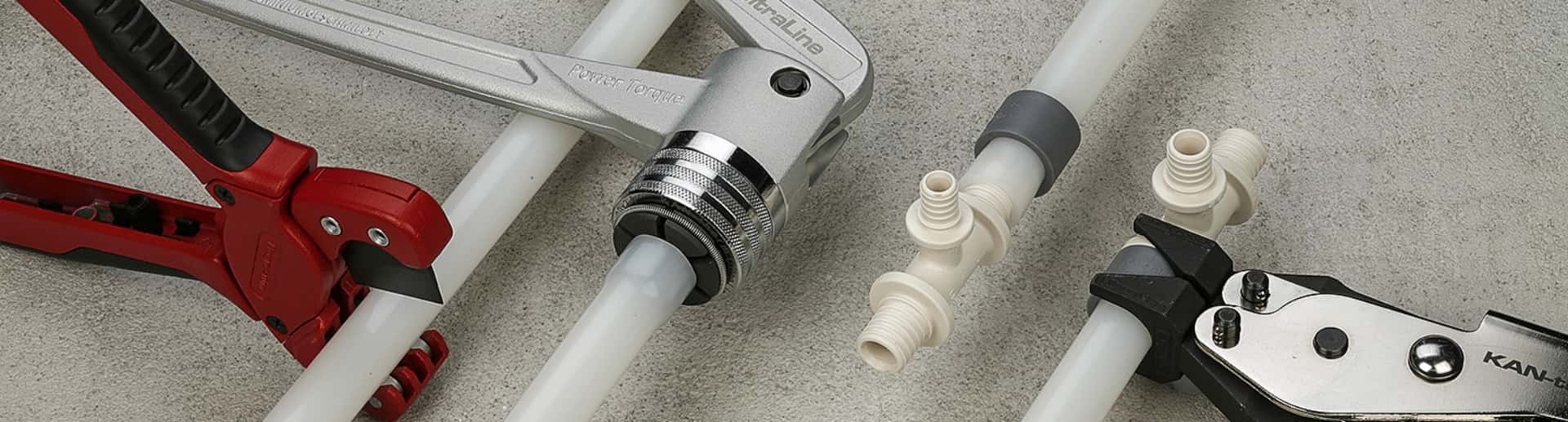
News list
KAN-therm systems in the environmental assessment of buildings
24 września 2026
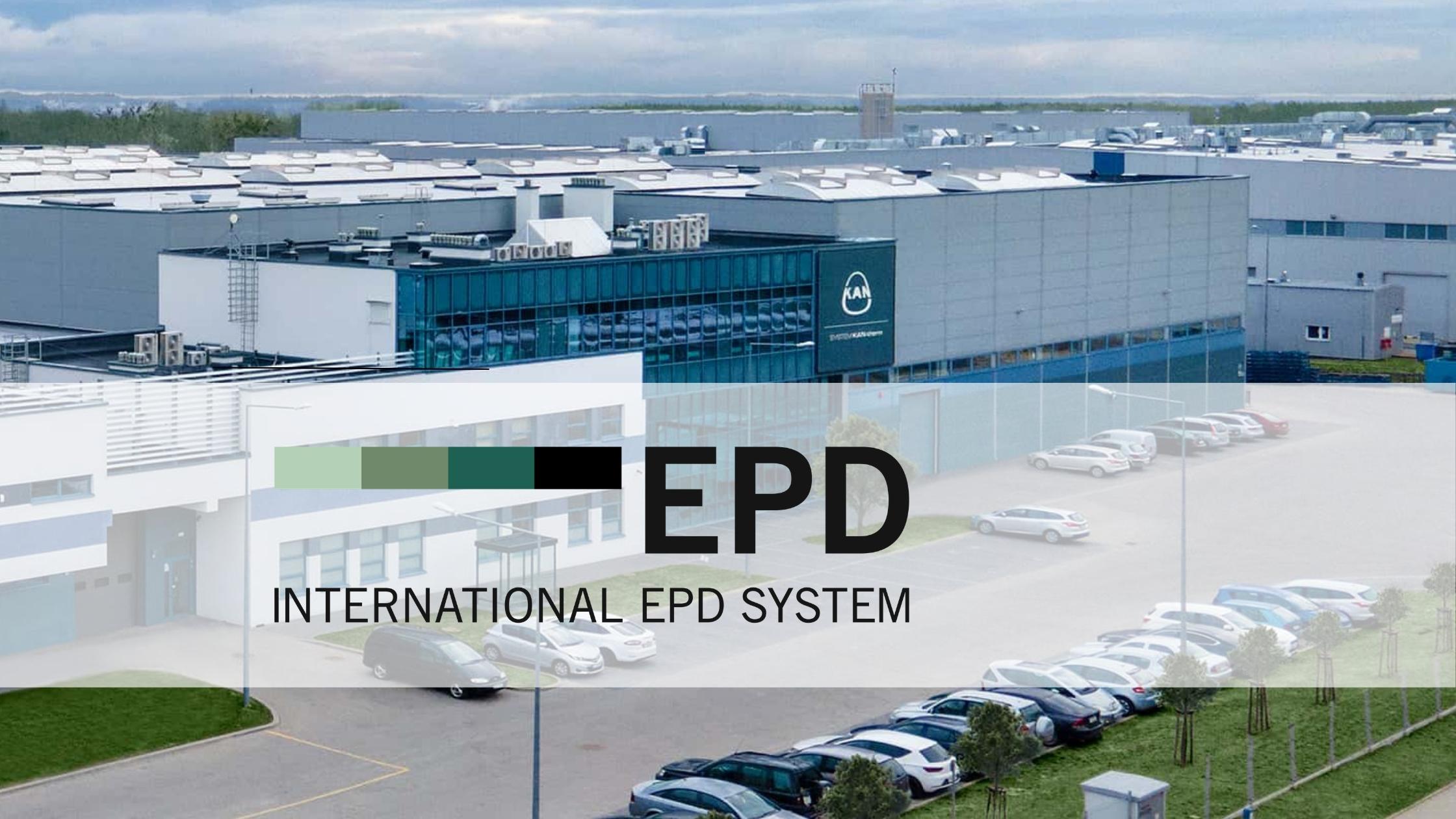
Durability, safety, technical performance and cost remain key criteria when selecting building services systems. But as environmental requirements become an increasingly important part of construction projects, another factor is gaining significance: access to reliable, verified data on the environmental impact of the products being specified. KAN Group has expanded the range of KAN-therm products covered by Environmental Product Declarations (EPDs). The latest declarations include PPSU and brass fittings, as well as PERT, PERTAL and PEX pipes. For investors, architects, designers and general contractors, this means access to independently verified environmental data that can be used during design, project assessment and the preparation of as-built documentation.
Pipes and fittings may ultimately be concealed within walls and floors, but their environmental impact remains part of the overall building assessment. Like structural materials, insulation and finishing products, building services components contribute to raw material and energy consumption, as well as to emissions generated throughout the construction process.
To account for this impact, project teams need product-specific data. This is precisely what Type III Environmental Product Declarations – EPDs are designed to provide.
Based on Life Cycle Assessment (LCA), EPDs describe the environmental impact of a product across defined stages of its life cycle – from raw material extraction and manufacturing, through transport and installation, to end-of-life processing.
The declarations covering the selected KAN-therm product groups have been prepared in accordance with EN 15804+A2 and independently verified in line with ISO 14025. The programme operator is the Building Research Institute (ITB).
Why does this matter to the construction industry?
The practical value of an EPD becomes particularly clear when environmental targets must be translated into specific product choices, calculations and project documentation.
For investors and developers, EPDs provide verified information that can support the environmental assessment of materials used in a project. They help document the environmental impact of selected solutions and provide data that can be incorporated into broader building-level assessments.
Rather than relying solely on general environmental claims, investors gain access to information prepared according to recognised standards and independently verified.
For architects and building services designers, EPDs provide an additional layer of information during the specification process. They allow installation products to be included in building Life Cycle Assessment and make it possible to evaluate design options not only in terms of technical performance, but also their environmental impact.
EPD data may also support documentation for projects assessed under systems such as LEED, BREEAM or DGNB, subject to the requirements of the relevant certification scheme and version. An EPD itself does not, however, automatically result in certification or a particular rating.
For general contractors and installation subcontractors, access to EPD documentation can simplify tender preparation, material submittals and compliance checks. Where EPDs are included in project or procurement requirements, the availability of verified documentation can become an important product selection criterion.
Which KAN-therm products are covered?
The latest declarations cover three key product groups used within KAN-therm installation systems:
- PPSU fittings used in KAN-therm ultraLINE and ultraPRESS – declaration ITB-EPD nr 827/2025;
- Brass fittings used in KAN-therm ultraPRESS and ultraLINE – declaration ITB-EPD nr 828/2025;
- PERT2, PERTAL2 and PE-Xc pipes used in the KAN-therm ultraLINE system, together with PERTAL pipes used in the KAN-therm ultraPRESS system – declaration ITB-EPD nr 963/2026.
Looking beyond carbon footprint
The EPDs for KAN-therm system components cover the main stages of the product life cycle. Modules A1-A3 include raw material supply and manufacturing, while A4-A5 cover transport to the construction site and installation. The assessment also addresses the end-of-life stage – dismantling, transport, waste processing and disposal – within modules C1-C4. Potential benefits and burdens associated with reuse, recovery and recycling beyond the system boundary are presented separately in module D. Importantly, the declarations look beyond carbon emissions alone. They also provide information on energy and raw material consumption, water use, waste generation and the use of secondary materials. For project teams, this provides a broader and more structured view of environmental performance than a single carbon indicator.
How should EPD data be interpreted?
An EPD should not be treated as a label stating that a product is simply “green” or environmentally superior to every alternative. Its purpose is different: it provides standardised, independently verified data that can be used as the basis for environmental assessment and comparison. For the KAN declarations discussed here, the declared unit is 1 kg of product. When the data is used to assess a specific installation, the actual quantities and masses of the products used must therefore be taken into account together with the assumptions and calculation rules described in the relevant declaration. The declarations also specify a reference service life of 50 years. This parameter was used in the environmental analysis in accordance with applicable standards regarding the durability of installation systems
Environmental documentation should start at the design stage
EPDs are most useful when considered early in the project rather than added to the documentation at the end of construction. Checking their availability during the planning and specification stages allows investors, designers and contractors to take both technical requirements and environmental documentation into account from the outset. Technical data explains how an installation system is designed to perform. An EPD adds another dimension by documenting its environmental impact. Together, these two sets of information provide project teams with a more complete basis for selecting building services systems for projects in which sustainability, transparency and measurable environmental performance are becoming increasingly important.







 Facebook
 LinkedIn
 YouTube
 Instagram